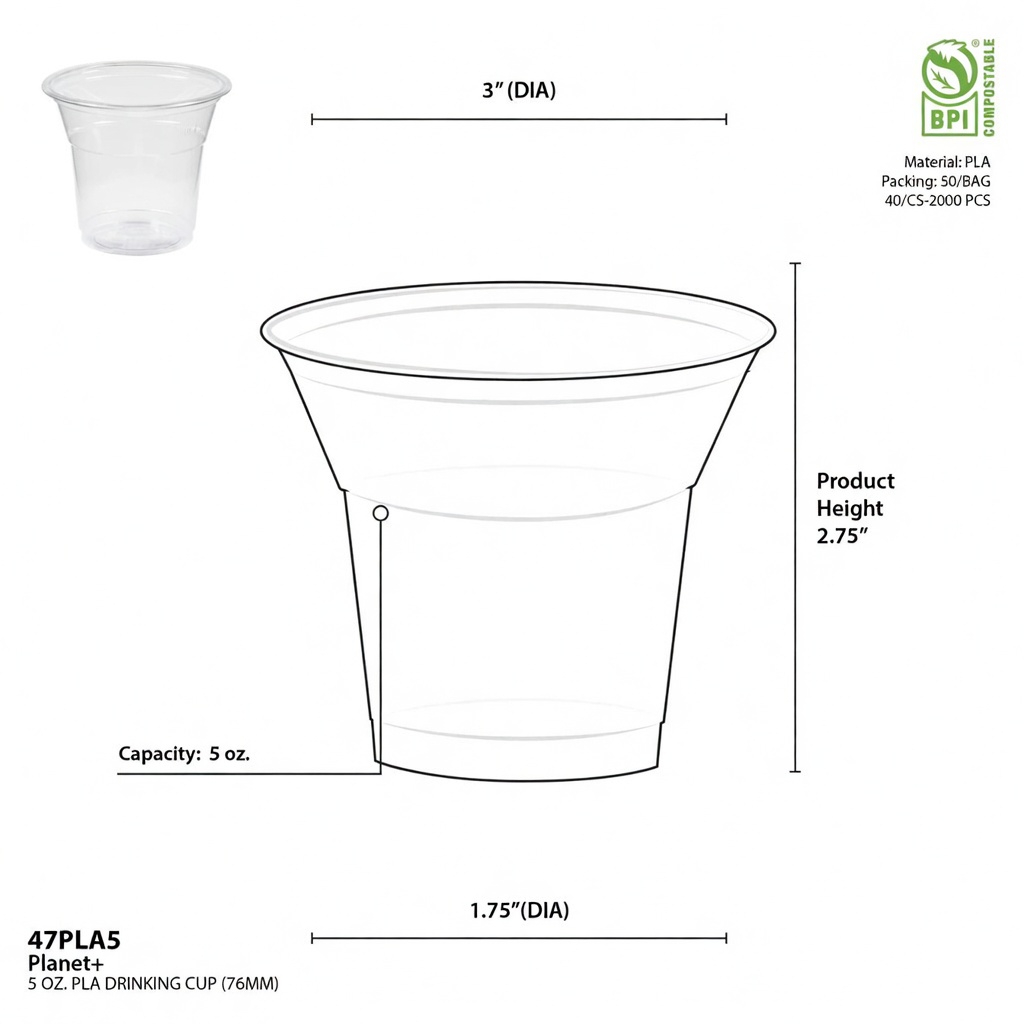
Versatile 4-5 oz Compostable Cold Cups Made from Corn
When you need a cup that bridges the gap between a tasting portion and a small beverage, these compostable 4-5 oz cold cups deliver. Manufactured from PLA (polylactic acid) — a plant-based bioplastic derived from corn — they offer the crystal-clear look and rigid feel of conventional plastic while fully decomposing in commercial composting facilities within 180 days. SAYRU® compostable 4-5 oz PLA cold cups hold dual compostability certifications from both BPI (Biodegradable Products Institute) and CMA (Compost Manufacturing Alliance), plus USDA BioPreferred verification, making them among the most credentialed small-format compostable cups available for restaurants, wineries, cafés, and beyond.
Features That Tackle Real Operational Challenges
Corn-Based PLA — The Practical Petroleum Replacement
Every conventional clear cup begins with crude oil. These cups begin with corn starch. PLA is a commercially compostable bioplastic that delivers the same transparency, stiffness, and smooth-rim drinking experience as petroleum-based plastic — but breaks down into natural elements at end of life instead of accumulating in landfills. For operators facing single-use plastic bans or consumer pressure to go green, PLA is the most seamless swap possible: identical stacking, dispensing, and storage behavior, with a fundamentally different environmental footprint.
Dual Compostability Certification — BPI and CMA
Many compostable products carry a single certification. These cups carry two. BPI (Biodegradable Products Institute) certification is the most widely recognized compostability credential in North America, confirming that the product meets ASTM standards for disintegration, biodegradation, and ecotoxicity. CMA (Compost Manufacturing Alliance) certification adds a critical second layer: it means the cups have been field-tested in actual commercial composting operations and verified to break down under real-world conditions — not just in a lab. Together, these dual certifications give composting facilities maximum confidence to accept this product, and give buyers the strongest possible proof of genuine compostability.
Durable Build — Designed to Hold Up During Service
The competitor page explicitly describes these cups as “durable in design.” That matters because flimsy portion cups crack under stacking pressure, collapse when gripped, and leak during transport — all of which create waste, slow down service, and frustrate staff. A rigid, well-constructed PLA cup holds its shape from prep through service, whether you’re loading a catering tray or handing one across a tasting counter.
Freezer and Refrigerator Safe
Pre-portion yogurt, pudding, dessert shooters, or cold beverages and store them in a walk-in cooler or freezer until service. These PLA cups handle cold temperatures without cracking, clouding, or warping. This unlocks batch-prep workflows that save labor during peak hours — especially valuable for catering operations, grab-and-go retail, and high-volume tasting events.
No Added PFAS
PFAS — the persistent “forever chemicals” — are under aggressive regulatory action across dozens of U.S. states and internationally. These cups are manufactured with no added PFAS, which means one less compliance headache in your supply chain. For institutional buyers who must certify PFAS-free food contact materials to meet state mandates or internal procurement policies, this is a built-in safeguard.
Gluten Free
The PLA material is derived from corn starch, but the finished cups are gluten free. This distinction matters for healthcare, school nutrition, and allergen-sensitive foodservice environments where every material touching food must clear allergen screening protocols.
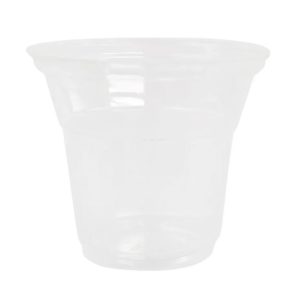
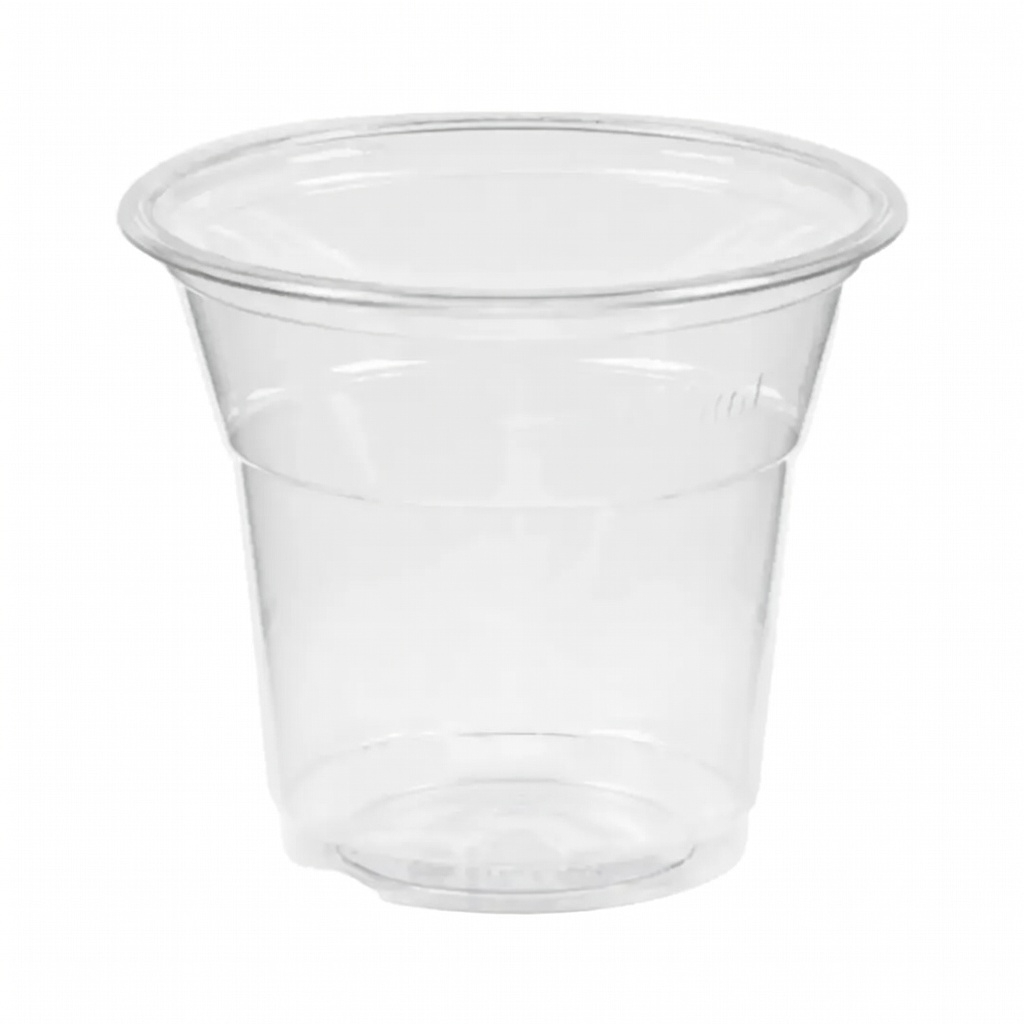
Crystal-Clear Walls for Product Visibility
PLA’s optical clarity rivals conventional plastic. Whether you’re showcasing a layered yogurt parfait, a vibrant dip, or the color of a wine sample, clear walls let the product sell itself. This drives higher customer engagement at tasting stations, deli counters, and grab-and-go displays where visual appeal directly influences purchase decisions.
Composts Within 180 Days — Zero Toxic Residue
In a commercial composting facility, these cups decompose fully within 180 days, returning to natural elements and leaving no toxic residue behind. They meet ASTM standards for compostability, providing the regulatory backbone for zero-waste programs, landfill-diversion mandates, and green-event certifications. These compostable 4-5 oz PLA cold cups with BPI and CMA dual certification decompose in under 180 days at commercial facilities, offering foodservice operators the strongest verified compostability credentials in their size class.
Product Specifications
| Specification | Detail |
|---|---|
| Capacity | 4-5 oz |
| Material | PLA (Polylactic Acid) — corn-based bioplastic |
| Height | 2.8 in (69.9 mm) |
| Top Diameter | 3.0 in (76.2 mm) |
| Bottom Diameter | 1.8 in (44.5 mm) |
| Temperature Suitability | Cold liquids only (PLA softens above 105 °F) |
| Storage | Refrigerator and freezer safe; store out of direct sunlight |
| PFAS | No added PFAS |
| Allergen Info | Gluten free |
| Compostability | Commercially compostable within 180 days |
| Lid | Sold separately — flat lid fits 4-7 oz cold cups |
| Case Quantity | 2,000 cups |
| Case Weight | 19 lb |
| Case Dimensions | 24 × 16 × 13 in (609.6 × 406.4 × 330.2 mm) |
| Packaging | Recyclable paperboard and polyolefin plastic wrap |
Certifications & Compliance
- BPI (Biodegradable Products Institute) Certified — The most widely recognized compostability certification in North America. BPI certification confirms the product meets ASTM standards for commercial composting, covering disintegration, biodegradation, and absence of ecotoxic effects on the resulting compost. Many municipal composting programs and waste haulers specifically require BPI certification before accepting products.
- CMA (Compost Manufacturing Alliance) Certified — Goes beyond lab testing. CMA sends the actual product to real commercial composting facilities for field testing, then certifies that it breaks down properly under operational conditions. This is the credential that composters themselves trust most.
- USDA BioPreferred — Independently verifies that the product contains a documented percentage of bio-based (plant-derived) content. Required for many federal procurement programs and a trusted marker of genuine renewable-material sourcing.
- ASTM Standards Compliant — Meets ASTM standards for compostability in commercial facilities, the foundational U.S. specification governing compostable plastics.
Applications & Use Cases
The 4-5 oz format is one of the most versatile sizes in disposable foodservice — large enough for a proper small drink or generous tasting pour, compact enough for portion control and dessert service. Here is where these cups solve real problems across industries.
Wineries & Wine Tasting Rooms
The competitor page specifically calls out wine tasting as a use case. A 4-5 oz pour is a standard wine tasting size. Tasting rooms serving dozens or hundreds of visitors per day need cups that are clear (so guests see the wine’s color and clarity), disposable at volume, and — increasingly — compostable to align with the agricultural sustainability values that wineries promote. BPI and CMA dual certification means these cups are accepted at composting facilities, keeping your tasting room’s waste stream clean.
Craft Breweries & Taprooms
Beer tastings, flight pours, and sampler sets all work in a 4-5 oz format. Brewery taprooms generate high volumes of single-use cups during tasting events and tours. Compostable PLA lets you run high-traffic events without filling dumpsters with petroleum plastic — and the clear cup showcases the beer’s color, head, and carbonation, which matters for craft-beer consumers evaluating a pour.
Restaurants & Fast Casual
Side sauces, dressings, condiment portions, yogurt sides, and kids’ beverages all fit the 4-5 oz range. Restaurants looking to eliminate petroleum plastics from their takeout and dine-in operations can drop these cups directly into existing workflows — same size, same clarity, same stackability — with the added benefit of compostability and no PFAS.
Cafés & Coffee Shops
Small iced coffees, cold brew samples, seasonal drink tastings, and juice portions are everyday café use cases. A compostable PLA cup aligns with the eco-conscious branding most independent cafés cultivate, closing the gap between sustainability messaging and actual packaging practices.
Catering & Event Services
Pre-portioned desserts, cocktail samples, yogurt parfaits, and beverage service at weddings, galas, and corporate functions. Caterers need cups that look polished enough for formal events and hold up during transport. The rigid PLA build and crystal-clear finish deliver both, while compostability simplifies post-event waste handling — everything goes into one compost bin instead of requiring plastic sorting.
Food Trucks & Street Food Vendors
Limited space, fast service, and a customer base that expects sustainable choices. Whether serving agua fresca, samples, or side sauces, these cups stack tightly, hold up on a moving truck, and compost after use — simplifying operations from storage to waste.
Corporate Cafeterias & Co-Working Pantries
Offices and co-working spaces offering cold drinks, juice, or snack portions at self-serve stations can switch to compostable PLA as a visible, measurable ESG action. The 4-5 oz size is ideal for portion-controlled beverages and condiment cups at salad bars and snack stations.
School Nutrition & University Dining
Juice portions, milk, fruit cups, and yogurt servings in breakfast and lunch programs. Institutional buyers need gluten-free, PFAS-free materials that also satisfy sustainability mandates. BPI certification is specifically required by many school district procurement policies. University dining halls pursuing zero-waste campus certifications benefit from a product that composts within 180 days.
Hospital & Healthcare Food Services
Patient meal trays include portion cups for juice, water, and liquid supplements. Healthcare procurement applies the highest food-contact safety standards — gluten-free, PFAS-free, and dual-certified compostable clears multiple approval hurdles simultaneously.
Farmers’ Markets & Outdoor Festivals
Vendors sampling kombucha, honey, cold-pressed juice, artisanal sauces, or craft beverages need disposable cups in high volume. Outdoor events increasingly mandate compostable serviceware. CMA certification is the single strongest credential event organizers look for because it proves facility-level acceptance.
Grocery Delis & In-Store Sampling
Grocery sampling programs for beverages, dips, yogurts, and cold soups burn through thousands of small cups weekly. Clear PLA showcases the product to drive trial, and compostability supports the sustainability programs major grocery chains are mandating across their supply chains.
Meal Kit Delivery & Ghost Kitchens
Pre-portioned sauces, dressings, and cold sides packed into delivery boxes. These cups withstand refrigeration in transit and won’t crack under the weight of other items, reducing leaks and customer complaints. Compostable packaging is a selling point meal kit brands actively market.
Ice Cream & Frozen Dessert Shops
Sample scoops, kids’ portions, and mini sundaes fit perfectly in 4-5 oz. Freezer-safe PLA holds up in a display case or served tableside. The clear wall helps customers see the product — critical for flavor selection at the counter.
Hotel Room Service & Hospitality
Juice, water, and beverage portions on room-service trays. Hotels tracking sustainability KPIs for ESG reporting or green-building certifications can upgrade to compostable PLA at minimal incremental cost per tray.
Stadium & Venue Concessions
Major venues generate massive single-use waste during events. Compostable 4-5 oz cups for condiments, samples, and side beverages integrate with venue composting infrastructure and support municipal landfill-diversion mandates that large venues must comply with.
Home Entertaining & Parties
Backyard barbecues, birthday parties, and holiday gatherings. These cups look and feel like premium clear plastic but compost after use. For hosts who want the convenience of disposable without the guilt of petroleum plastic, compostable PLA is a direct swap.
Compostable PLA vs. Traditional Plastic Cold Cups
| Attribute | Compostable PLA Cup | Conventional Plastic Cup |
|---|---|---|
| Raw Material | Corn starch — renewable, plant-based | Petroleum — non-renewable fossil fuel |
| End of Life | Decomposes in commercial compost within 180 days | Persists in landfills for hundreds of years |
| Toxic Residue | None — returns to natural elements | Can leach microplastics and chemicals |
| PFAS | No added PFAS | May contain PFAS depending on manufacturer |
| Clarity | Crystal clear — visually comparable to plastic | Clear |
| Certifications | BPI, CMA, USDA BioPreferred, ASTM compliant | Typically none for compostability |
| Regulatory Standing | Compliant with most single-use plastic bans | Increasingly restricted or banned |
| Freezer Safe | Yes | Varies by product |
Frequently Asked Questions
What is the actual capacity of these cups?
These cups are rated at 4-5 oz, making them suitable for generous tasting pours, small cold beverages, portion cups for condiments and desserts, and side servings of yogurt, pudding, or snacks.
Can I use these cups for hot drinks?
No. PLA is a cold-use material that begins to soften at 105 °F. These cups are intended exclusively for cold liquids, refrigerated foods, and frozen applications. Store out of direct sunlight and away from heat sources.
What does BPI certification mean?
BPI (Biodegradable Products Institute) is the leading compostability certification body in North America. A BPI-certified product has been independently verified to meet ASTM standards for commercial composting — confirming it will disintegrate, biodegrade, and leave no ecotoxic residue. Many municipal composting programs and waste haulers specifically require BPI certification before accepting packaging.
What makes CMA certification different from BPI?
CMA (Compost Manufacturing Alliance) certification is field-based rather than lab-based. The product is sent to actual commercial composting facilities and tested under real operating conditions. While BPI confirms lab-standard compliance, CMA confirms real-world performance. Having both certifications provides the strongest possible proof of compostability.
Do these cups contain PFAS or forever chemicals?
No. These cups are manufactured with no added PFAS. This is increasingly important as states across the U.S. enact bans on PFAS in food contact packaging and institutional buyers add PFAS-free requirements to procurement policies.
Are these cups gluten free?
Yes. Although PLA is derived from corn starch, the finished product is gluten free, making it appropriate for foodservice environments with strict allergen protocols.
Can these cups be refrigerated or frozen?
Yes. They are designed for both refrigerator and freezer storage. Pre-fill with yogurt, pudding, dessert shooters, or cold beverages and store until service — the cups maintain their structural integrity at cold temperatures.
Is a lid available?
Yes. A matching flat compostable lid designed to fit 4-7 oz cold cups is available separately. This lid is ideal for takeout, delivery, and grab-and-go scenarios where a secure cover prevents spills and maintains freshness.
How many cups come in a case?
Each case contains 2,000 cups, weighs 19 lb, and measures 24 × 16 × 13 inches. Packaging uses recyclable paperboard and polyolefin plastic wrap.
Will these cups satisfy single-use plastic bans in my area?
Because they are made from plant-based PLA — not petroleum plastic — and hold BPI, CMA, and USDA BioPreferred certifications, these cups meet the requirements of most single-use plastic bans and sustainable packaging mandates in effect across the United States. Always verify your specific local ordinances for full compliance.