
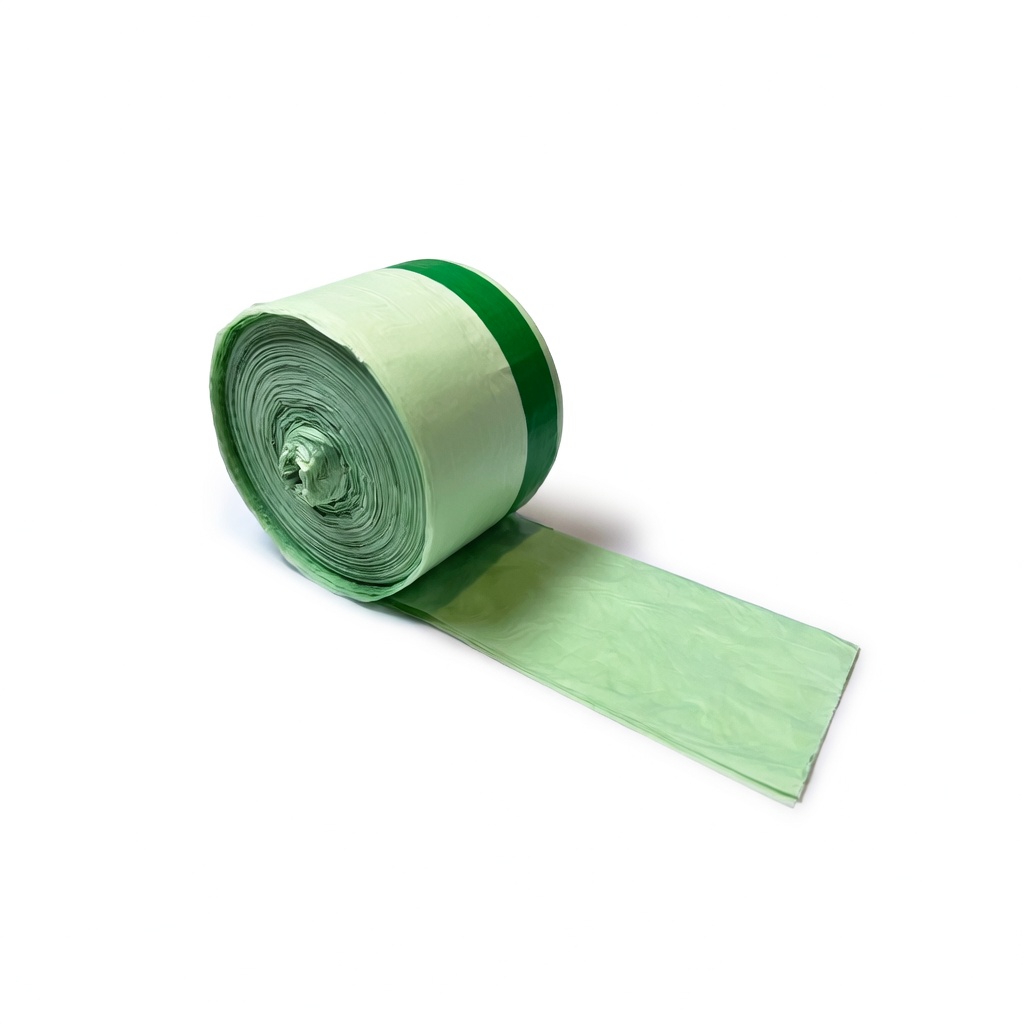
The Smarter Produce Bag: Plant-Based, Certified Compostable, Built for Retail
SAYRU® compostable produce bags deliver a high-performance, planet-friendly alternative to conventional plastic film bags in grocery stores, supermarkets, and farmers’ markets. Manufactured from plant starches, vegetable oils, and fully compostable polymers, these 15″ × 17″ bags measure 0.48 mil thick and hold up to 2 gallons — strong enough to carry fresh produce from shelf to home, then serve a second life as a food scrap collection liner for home composting. Every roll is BPI certified to ASTM D6400 and TÜV Austria OK Compost HOME verified, meaning these bags fully break down in both commercial composting facilities and backyard garden compost settings without leaving harmful residues behind.
Unlike conventional polyethylene film, these compostable produce bags are made from 40–50% bio-based renewable content derived from non-GMO plant starches and vegetable oils. The material breathes — allowing moisture to evaporate while remaining leak-proof — which actively extends the freshness of many fruits and vegetables after shoppers bring them home. SAYRU® compostable produce bags on a roll are a certified, plant-based replacement for single-use plastic produce bags, featuring BPI certification (#891053), ASTM D6400 and EN 13432 compliance, Non-GMO Project verification, and FDA approval for direct food contact.
Why Retailers and Buyers Choose These Bags
Genuinely Dual-Purpose: Shop, Store, Then Compost
Most produce bags get used once and thrown away. These bags are designed for a second act. Shoppers pick their produce, carry it home, store it in the fridge, and then repurpose the same bag as a compost pail liner for food scraps. This “use and use again” lifecycle turns a disposable product into a value-added touchpoint — and gives your customers a tangible reason to feel good about shopping at your store. For retailers tired of fielding complaints about wasteful single-use packaging, this bag is the answer.
Breathable Film That Actually Extends Produce Shelf Life
Conventional plastic traps moisture around produce, accelerating spoilage and bacterial growth. SAYRU® compostable produce bags are engineered with a breathable film structure that allows heat and moisture to evaporate without leaking. The result: fruits and vegetables with skins stay fresher longer in storage. For grocery store operators dealing with shrink and spoilage losses, switching to a bag that actively helps maintain produce quality is not just an environmental upgrade — it’s an operational one.
Star-Sealed Bottom for Reliable Strength
Flimsy produce bags that tear under the weight of apples or potatoes frustrate shoppers and create in-store messes. These bags feature a reinforced star-seal bottom designed to distribute weight evenly and prevent leaking or splitting. At 0.48 mil thickness, they strike the ideal balance between durability and material efficiency — thick enough to handle heavy root vegetables, thin enough to tear cleanly from the perforated roll.
Compact Roll Format Built for Self-Service
Each case ships with 4 narrow-profile compact rolls, with bags connected on a continuous, perforated roll for easy tear-off. The slim roll design fits standard in-store dispensers and takes up minimal shelf space in the produce department. For retailers managing high-traffic produce aisles, the self-serve format reduces staff intervention and keeps customers moving. No fumbling, no tangled bags — just pull, tear, and go.
Certified Compliant with Plastic Bag Bans
An increasing number of states and municipalities have enacted single-use plastic bag bans — and enforcement is tightening. SAYRU® compostable produce bags conform to state and local plastic bag ban requirements, including California’s SB 1972. For retail buyers navigating a patchwork of regulations, stocking a bag that’s already verified compliant across jurisdictions eliminates legal risk and simplifies procurement decisions.
No Microplastic Pollution — Ever
Conventional plastic produce bags fragment into microplastics that persist in soil and waterways for decades. These bags are made from resins that microorganisms in soil can fully consume. In controlled composting environments, they decompose in 10–45 days, returning to organic matter with zero toxic residues. For brands and retailers building genuine sustainability programs — not greenwashing campaigns — this is the kind of verifiable claim that stands up to scrutiny.
Non-GMO Project Verified Materials
The plant-based starches used in these bags have been independently evaluated and verified by the Non-GMO Project, meeting strict criteria for GMO avoidance. This matters to natural food stores, organic grocers, co-ops, and any retailer whose customer base cares deeply about ingredient transparency — even in their packaging.
Product Specifications
| Parameter | Detail |
|---|---|
| Bag Dimensions | 15″ × 17″ (W × L) |
| Film Thickness | 0.48 mil |
| Capacity | 2 gallon |
| Bag Style | Straight top / Star bottom (sealed) |
| Color | Translucent green |
| Material | Plant starches, vegetable oils, and compostable polymers (40–50% bio-based renewable content) |
| Roll Format | Compact narrow-profile roll, continuous perforated design |
| Case Pack | 4 rolls per case, 60 cases per pallet |
| Shelf Life | 12 months from date of manufacture |
| Composting Time | 10–45 days in controlled composting environments |
| Storage Conditions | Cool, dry place; away from excessive heat |
| Contains Polyethylene | No |
| FDA Approved | Yes — approved for direct food contact |
Certifications and Compliance You Can Trust
Every certification listed below applies specifically to this product and has been independently verified by a recognized third-party body. For B2B buyers making procurement decisions, these aren’t marketing claims — they’re auditable proof points.
- BPI Certified (Biodegradable Products Institute) — The leading North American certification for industrial compostability. Confirms this product meets ASTM D6400 standards and will fully decompose in commercial composting facilities without leaving harmful residues.
- ASTM D6400 Compliant — The U.S. standard requiring compostable products to achieve at least 90% biodegradation within 180 days. This is the baseline requirement for any product labeled “compostable” in North America and is a prerequisite for municipal organic waste stream acceptance.
- EN 13432 Compliant — The European equivalent of ASTM D6400, requiring disintegration within 12 weeks and complete biodegradation within 6 months. Dual compliance means this product is market-ready for both North American and European distribution.
- TÜV Austria OK Compost HOME — Certifies that these bags biodegrade in lower-temperature home garden compost settings, not just industrial facilities. This is a critical differentiator — many “compostable” bags on the market only break down at industrial temperatures.
- TÜV Austria OK Compost INDUSTRIAL — Independent verification that these bags break down fully in industrial composting plants under controlled conditions.
- Non-GMO Project Verified — Third-party verification that the plant-based raw materials meet strict criteria for GMO avoidance. Required for organic and natural food retail channels.
- Compost Manufacturing Alliance (CMA) Approved — Field-tested and approved by a partnership of real-world commercial composting facilities. Categories include CMA-H, CMA-I (Covered In-Vessel), CMA-W (Windrow Technology), and CMA-A (Aerated Static Pile).
- FDA Approved for Food Contact — Safe for direct contact with fresh produce and food items.
- California SB 1972 Compliant — Meets California’s labeling and performance requirements for compostable products. Also conforms to other state and local plastic bag ban regulations.
Where These Bags Make the Biggest Impact
SAYRU® compostable produce bags are engineered for any retail or foodservice environment where fresh produce, bulk items, or organic goods are bagged at the point of sale. Below is a detailed breakdown of applications and the specific operational problems this product solves in each setting.
Grocery Stores and Supermarkets
High-volume produce departments go through thousands of plastic bags per week — and customer scrutiny around single-use plastic is at an all-time high. These compostable bags drop into existing roll dispensers with zero infrastructure changes, letting stores eliminate conventional plastic from the produce aisle while maintaining the self-serve convenience shoppers expect. Compliance with state-level plastic bag bans is built in, removing procurement headaches for regional and multi-state chains.
Farmers’ Markets and Farm Stands
Farmers’ market vendors need a bag that aligns with the values their customers already hold. Offering a certified compostable bag reinforces the farm-to-table, sustainability-minded identity that draws shoppers to these markets in the first place. The compact roll format is portable and works on tabletop dispensers or simple wall-mount brackets — ideal for vendors with limited booth space.
Natural Food Stores and Organic Co-ops
Customers shopping at natural and organic retailers expect packaging that matches the products inside. Non-GMO Project Verified materials and home compostability certification meet the exacting standards of this buyer segment. Store managers can confidently market these bags as part of a holistic sustainability program without risk of greenwashing backlash.
Bulk Food Sections
Bulk food departments — grains, nuts, dried fruit, trail mixes — require lightweight bags that tear easily from a roll and hold up during weighing and transport. The 2-gallon capacity and perforated roll format fit this use case precisely. Shoppers can fill, weigh, label, and carry home without needing a second bag.
CSA (Community Supported Agriculture) Programs
CSA programs distribute weekly boxes of fresh produce to subscribers who already prioritize local, sustainable food systems. Packaging those items in compostable bags instead of plastic creates a consistent brand experience from farm to doorstep. Subscribers can compost the bags along with any vegetable scraps — closing the loop right in their own backyards.
Meal Kit Delivery and Meal Prep Services
Meal kit companies face mounting pressure to reduce plastic packaging. These produce bags can individually wrap or separate fresh ingredients within each kit. The breathable film helps maintain freshness during transit, and the home-compostable certification lets meal kit brands tell a compelling end-of-life story to environmentally conscious subscribers.
Grocery Deli and Prepared Food Counters
Deli counters and hot/cold prepared food sections need quick-grab bags for items like loose salad greens, fresh herbs, or portioned fruit. These bags provide a sustainable replacement for the ubiquitous plastic produce bags found at grab-and-go stations. The translucent green film lets customers see contents at a glance while signaling the bag’s compostable credentials.
School and University Dining Programs
Institutional dining programs are under increasing pressure from students, parents, and administrators to adopt greener operations. Compostable produce bags can be deployed in cafeteria fruit stations, salad bars, or grab-and-go kiosks. Schools that already have composting programs benefit from a bag that goes directly into the organic waste stream without sorting.
Corporate Cafeterias and Co-working Space Pantries
Companies with sustainability commitments need every touchpoint — including pantry and cafeteria packaging — to align with their ESG reporting. Swapping plastic produce bags for certified compostable ones is a visible, low-cost change that directly supports corporate waste diversion targets.
Hotel Breakfast Buffets and Room Service
Hotels offering breakfast fruit displays or room-service fruit baskets can provide compostable bags for guests to carry items back to their rooms. This replaces throwaway plastic bags with a solution that supports hotel green certifications like LEED or Green Globe.
Food Banks and Community Distribution Programs
Food banks distributing fresh produce need affordable, functional bags. Compostable produce bags offer the same usability as plastic at a comparable cost trajectory, while demonstrating the organization’s environmental values to donors and community partners.
Outdoor Festivals, Events, and Concessions
Zero-waste events increasingly require all vendor packaging to be compostable. These bags satisfy event compostability mandates for any vendor selling loose produce, snack items, or packaged goods. Event organizers benefit from simplified waste stream management when all bags on-site are compost-compatible.
Catering Companies and Event Planners
Caterers sourcing and prepping large quantities of fresh produce can use these bags during food prep, then direct them to compost rather than landfill. For clients who specify eco-friendly events — weddings, galas, corporate retreats — compostable produce bags are a small but meaningful detail that supports the broader sustainability story.
Home Composting and Food Scrap Collection
After serving their primary purpose as produce bags, these bags can be reused at home to line countertop compost pails or small bins for food scrap collection. Thanks to TÜV Austria OK Compost HOME certification, they’ll break down fully in a garden compost pile — no industrial facility required. This dual-use lifecycle is a key differentiator over bags that only decompose under commercial conditions.
Compostable Bags vs. Conventional Plastic Produce Bags
| Attribute | SAYRU® Compostable Produce Bags | Conventional Plastic (LDPE) Bags |
|---|---|---|
| Primary Material | Plant starches, vegetable oils, compostable polymers | Low-density polyethylene (petroleum-based) |
| Bio-Based Content | 40–50% renewable plant-based content | 0% — entirely fossil-fuel derived |
| Decomposition Time | 10–45 days in composting environments | 50+ years (fragments into microplastics) |
| Microplastic Risk | None — consumed by soil microorganisms | High — breaks into persistent microplastic particles |
| Toxic Residues | None — leaves no harmful residues | May leach chemical additives |
| Home Compostable | Yes — TÜV Austria OK Compost HOME certified | No |
| Breathability | Allows moisture evaporation; extends produce freshness | Traps moisture; accelerates spoilage |
| Plastic Bag Ban Compliant | Yes — conforms to state and local bans | Banned or restricted in growing number of jurisdictions |
| GMO-Free Verified | Yes — Non-GMO Project Verified | Not applicable |
| FDA Food Contact Approved | Yes | Varies by product |
| Reusable for Composting | Yes — doubles as food scrap liner | No — goes to landfill |
Switching from conventional plastic to certified compostable produce bags eliminates microplastic pollution from your produce aisle, meets current and upcoming plastic ban legislation, and gives your customers a product they can compost at home — turning a disposal problem into a soil health solution.
Customization Options
SAYRU® offers customization for B2B clients ordering in bulk. Custom printing, branding, and packaging configurations are available to match your store’s identity and operational requirements. Contact our team to discuss custom roll counts, case packs, printed film options, and private-label opportunities. All customized products maintain the same certifications and compostability performance as our standard product line.
Frequently Asked Questions
Are these compostable produce bags safe for direct food contact?
Yes. These bags are FDA approved for direct contact with fresh produce and food items. They are manufactured from plant starches, vegetable oils, and compostable polymers — with no polyethylene and no chemical additives.
Can I compost these bags at home, or do they require an industrial facility?
Both. These bags hold TÜV Austria OK Compost HOME certification, meaning they will fully biodegrade in a home garden compost setting. They are also certified for industrial composting facilities through BPI and CMA. In controlled commercial composting environments, they break down in as little as 10–45 days.
What certifications do these produce bags hold?
They carry BPI certification (meeting ASTM D6400), EN 13432 compliance for European markets, TÜV Austria OK Compost HOME and INDUSTRIAL certifications, Non-GMO Project Verification, CMA (Compost Manufacturing Alliance) approval, and FDA food contact approval. They also comply with California SB 1972 and other state-level plastic bag ban regulations.
Will these bags work with our existing in-store roll dispensers?
Yes. The narrow-profile compact roll format is designed to fit standard produce bag dispensers used in grocery and retail environments. Each case contains 4 rolls, and the continuous perforated design allows shoppers to tear bags off easily — identical to the self-serve experience of conventional produce bag rolls.
What are these bags made from?
They are made from plant starches, vegetable oils, and fully compostable polymers, with 40–50% of the material derived from bio-based renewable content. The raw materials are Non-GMO Project Verified. The bags contain no polyethylene and no chemical additives.
Do these bags help keep produce fresh?
Yes. Unlike conventional plastic, the film is breathable — it allows moisture and heat to evaporate without leaking. This reduces condensation and bacterial buildup, which helps many fruits and vegetables with skins stay fresher for longer in home storage.
How long can I store these bags before they start composting?
These bags have a 12-month shelf life when stored in a cool, dry location away from excessive heat. Composting only begins when the bags are exposed to microorganisms found in soil and organic materials like food scraps.
Do these bags comply with plastic bag bans?
Yes. These bags conform to state and municipal plastic bag ban requirements, including California’s SB 1972. They are a verified-compliant replacement for conventional plastic produce bags in jurisdictions that have enacted or are phasing in single-use plastic restrictions.
Do these bags leave behind microplastics?
No. Unlike conventional plastic bags — which fragment into microplastic particles that persist in the environment for decades — these bags are made from resins that soil microorganisms can fully consume. They decompose completely into organic matter with no toxic or plastic residues left behind.
What is the minimum order quantity for wholesale purchases?
SAYRU® products are available in bulk for B2B buyers. Contact our sales team for pricing, minimum order quantities, custom packaging options, and lead times. Visit our wholesale portal or request a quote directly through our website.