Pla Bioplastic 24 oz Food Containers — Why the Material Matters
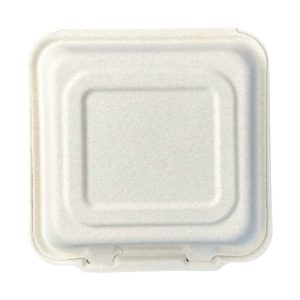
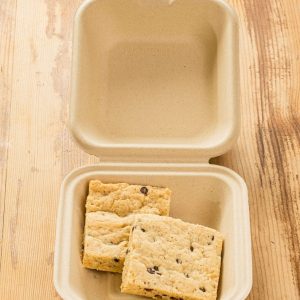
Plant-based bioplastic offers a true alternative to fossil-fuel polymers in single-use foodservice. That is the body of these 24 oz food containers. There is no plastic film, no wax coating, and no PFAS — the unbleached fiber itself is dense enough to resist oil and grease, and to compost cleanly as a single material. The result is a foodservice container that does not compromise on heat, structure, or end-of-life recovery.
Each case ships 180 units, with 36 cases per pallet for 6,480 units per pallet — sized for catering, school dining, hospital foodservice, hotel banquets, and operators transitioning out of foam.
Where this container earns its place on the line
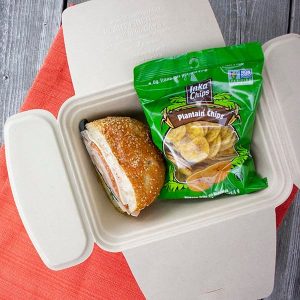
- Dry-to-mildly-moist hot menu items — school lunch entrées, sandwiches, baked dishes, fries, pastries — the dense fiber holds without soaking.
- Bakery and deli grab-and-go — single-material recovery for compost-stream sorting.
- Operators on home-composting back-of-house — OK compost HOME certified for backyard or commercial composting.
- Catering with single-component plating — appetizers, sides, simple entrées.
- School and university foodservice — compostable end-to-end with no plastic or wax to separate.
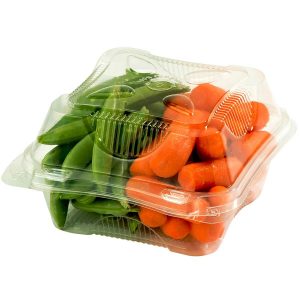
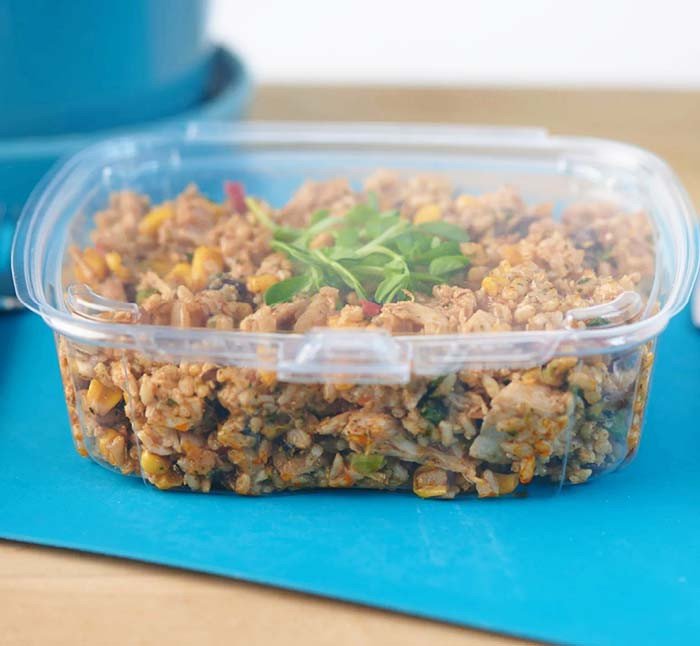
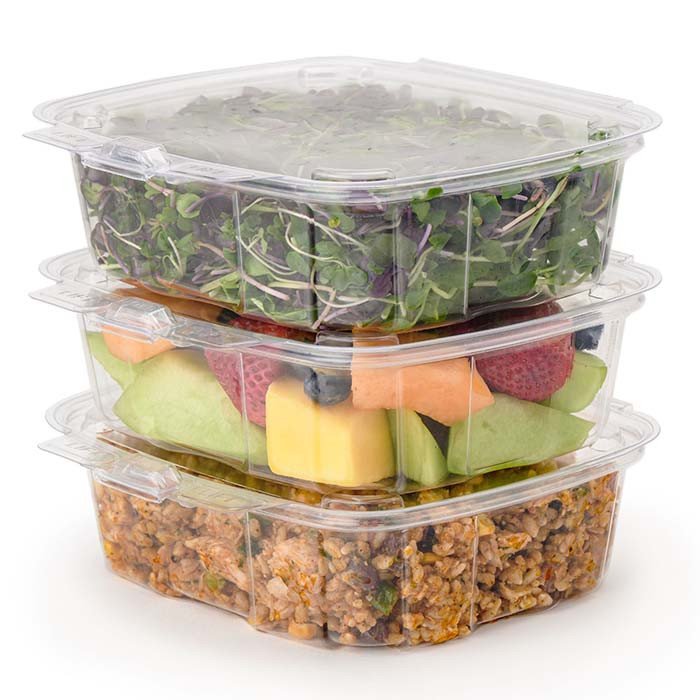
- Cold and ambient menu items — fresh fruit, parfaits, salads without dressing, bakery and grab-and-go.
Five problems this SKU is engineered against
1. Grease resistance without synthetic coatings
Unbleached plant fiber is naturally oil and grease resistant — the barrier is the fiber itself, not a synthetic coating that fails after 30 minutes on the line.
2. Multi-state compliance complexity
Operators running locations across 6+ states cannot stock a different SKU per jurisdiction. This product clears the strictest of the state PFAS and biobased food-packaging rules currently in force, so a single SKU works in California, New York, Washington, and any state that follows.
3. Foam container bans without a true replacement
Polystyrene foam was the workhorse of school cafeterias and quick-service venues for decades. Foam is now banned or restricted in 11 U.S. states and over 250 municipalities. Most “alternatives” are PE-coated paperboard (still plastic, still not compostable) or thicker plastic (still landfill). A plant-based compostable container is the only fully sustainable substitute that survives hot food.
4. Procurement asking for documentation
Buyers with sustainability mandates need certificates: USDA Biobased, ASTM D-6400, FDA food contact, NSF Certified Compostable, TÜV AUSTRIA. All applicable certifications are listed below; lab/cert documents are available on request for B2B accounts.
5. PFAS food-packaging laws tightening every year
California AB 1200, AB 1201, New York’s Hazardous Packaging Act, and parallel laws in Washington, Colorado, Maryland, Minnesota, Connecticut, Rhode Island, Vermont, and Hawaii ban intentionally added PFAS in food packaging. These do not contain added PFAS at any stage of manufacture.
Build, materials, and operator features
- Pla bioplastic construction — plant-based material chosen for this application.
- Hot food safe to 220°F — soups, stews, hot pastas, curries, casseroles, baked dishes.
- Freezer safe — does not embrittle below 0°F; meal-prep ready.
- Oil and grease resistant — barrier is the natural fiber itself, no synthetic coating.
- Composts in 2–4 months in a commercial composting facility (industrial compostable).
- Case of 180 — sized for catering, school dining, and operator-scale foodservice.
- Gluten-free and allergen-friendly material.
- Clean visual presentation for branded retail or foodservice.
Compliance, compostability, and food-contact certificates
- OK compost INDUSTRIAL (TÜV AUSTRIA) — disintegrates and biodegrades in a commercial composting facility within 12 weeks.
- USDA Certified Biobased Product (U.S. Department of Agriculture) — verified renewable plant content; eligible under federal BioPreferred procurement programs.
- ASTM D-6400 (ASTM International) — meets the U.S. industry standard for industrial compostability.
Product specifications
| Capacity | 24 oz |
|---|---|
| Material | Pla bioplastic |
| Color | Natural Fiber |
| Heat tolerance | Up to 220°F |
| Freezer safe | Yes |
| Compost timeframe | 2–4 months (commercial); industrial compostable only |
| Quantity per case | 180 |
| Cases per pallet | 36 (6,480 units per pallet) |
| Case weight | 14.0 lbs |
| SKU | SYR-FC-281 |
Frequently asked questions
Does this food container hold up under saucy or steaming hot dishes?
Yes. The body is rated for hot food up to 220°F. Hot pastas, curries, soups (with a lid), stews, and baked entrées hold without warping.
What is the case and pallet configuration for these food containers?
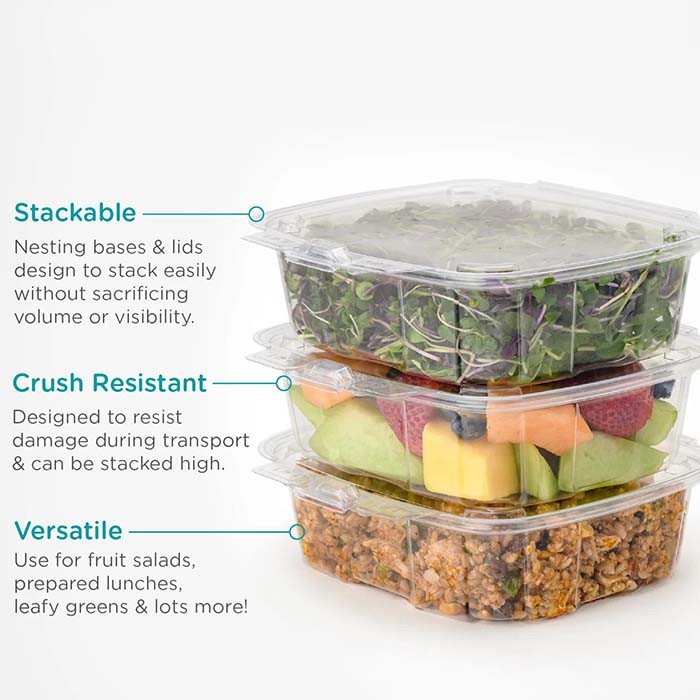
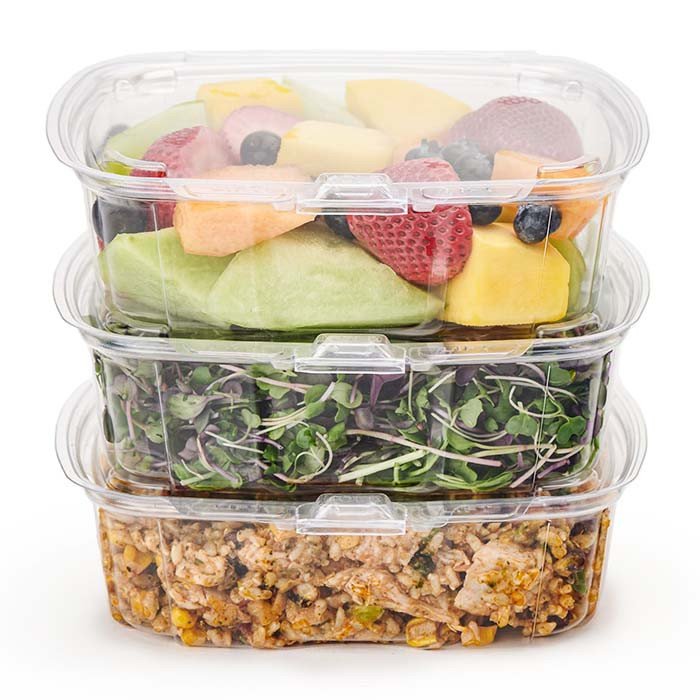
Yes. They stack tightly when empty (180 per case, 36 cases per pallet for 6,480 units per pallet) and stack safely with a lid when filled. The footprint fits standard foodservice slots and delivery bags.
Do these meet California AB 1200 and New York PFAS food packaging regulations?
Yes. Because no PFAS is intentionally added, they comply with California AB 1200 / AB 1201, New York’s Hazardous Packaging Act, and parallel laws in Washington, Colorado, Maryland, Minnesota, Connecticut, Rhode Island, Vermont, and Hawaii. Lab test reports are available for B2B accounts on request.
Do these food containers qualify for school district biobased and PFAS-free procurement requirements?
Yes. They meet PFAS-free, biobased, and compostable procurement requirements many state school systems now mandate: no added PFAS, TÜV AUSTRIA OK compost INDUSTRIAL, USDA Biobased, ASTM D-6400, NSF Certified Compostable. Documentation is available on request.
Do you sell matching lids for these food containers?
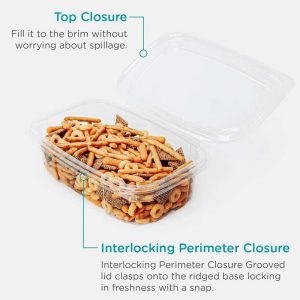
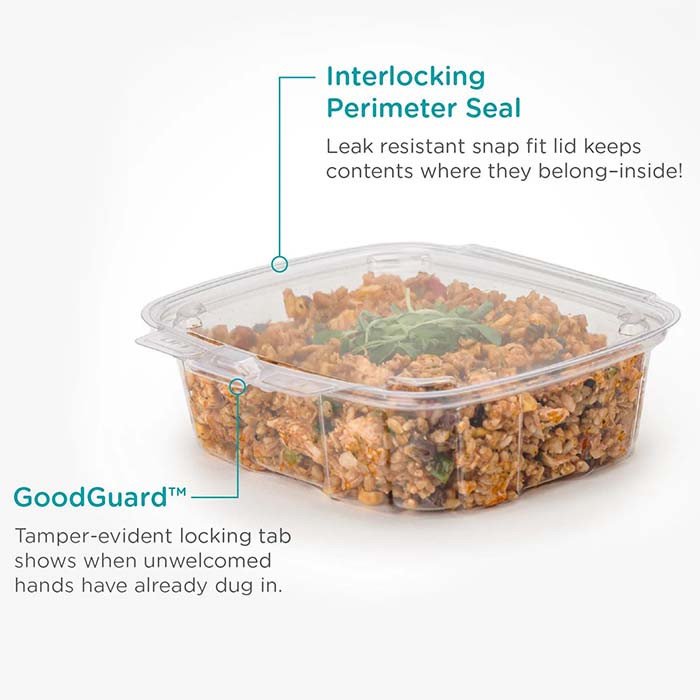
Three lid options typically fit foodservice containers in this size range: clear PLA dome lids for visible merchandising of salads, parfaits, and bakery; clear PLA flat lids for stackable delivery; and matching plant-fiber lids for opaque, plant-based compostable closure. Lids are sold separately by the case — pair by capacity and footprint.
What is the composting timeline for these food containers?
In a commercial composting facility (ASTM D-6400 conditions), it breaks down in 2 to 4 months. This product is industrial compostable only — it will not meaningfully break down in a backyard compost pile.
Material & performance
Made from PLA (polylactic acid), this product is plant-derived bioplastic engineered for hot-fill applications up to 220°F when PLA-lined. Under BPI-certified industrial composting conditions it breaks down to CO2, water, and biomass in 90–180 days — meeting ASTM D6400 / ASTM D6868 (paper composites with PLA coating).
Where this fits in your operation
Cold-side clarity for grab-and-go juice and smoothie programs. Sized to standard fountain pumps and rigid through ice load — clear PLA shows the product without the brittle failure of recycled PET.
Compostability standards
This product is certified by BPI (the leading North American compostability certifier) and meets ASTM D6400 for compostable plastics or ASTM D6868 for paper substrates with biodegradable coatings. End-of-life processing requires an industrial composting facility — check your municipal program before disposal.
Related Clear Clamshell Containers products
- 32 oz Compostable Deli Containers | Hot Food Safe to 220°F | Freezer-Safe Meal Prep
- Compostable Single 3.75″ PLA Clear Dessert Clamshell Containers, Hot Food Safe to 220°F
- 48 oz PLA Bioplastic Deli Containers for Foodservice & Catering
Browse all Clear Clamshell Containers products.