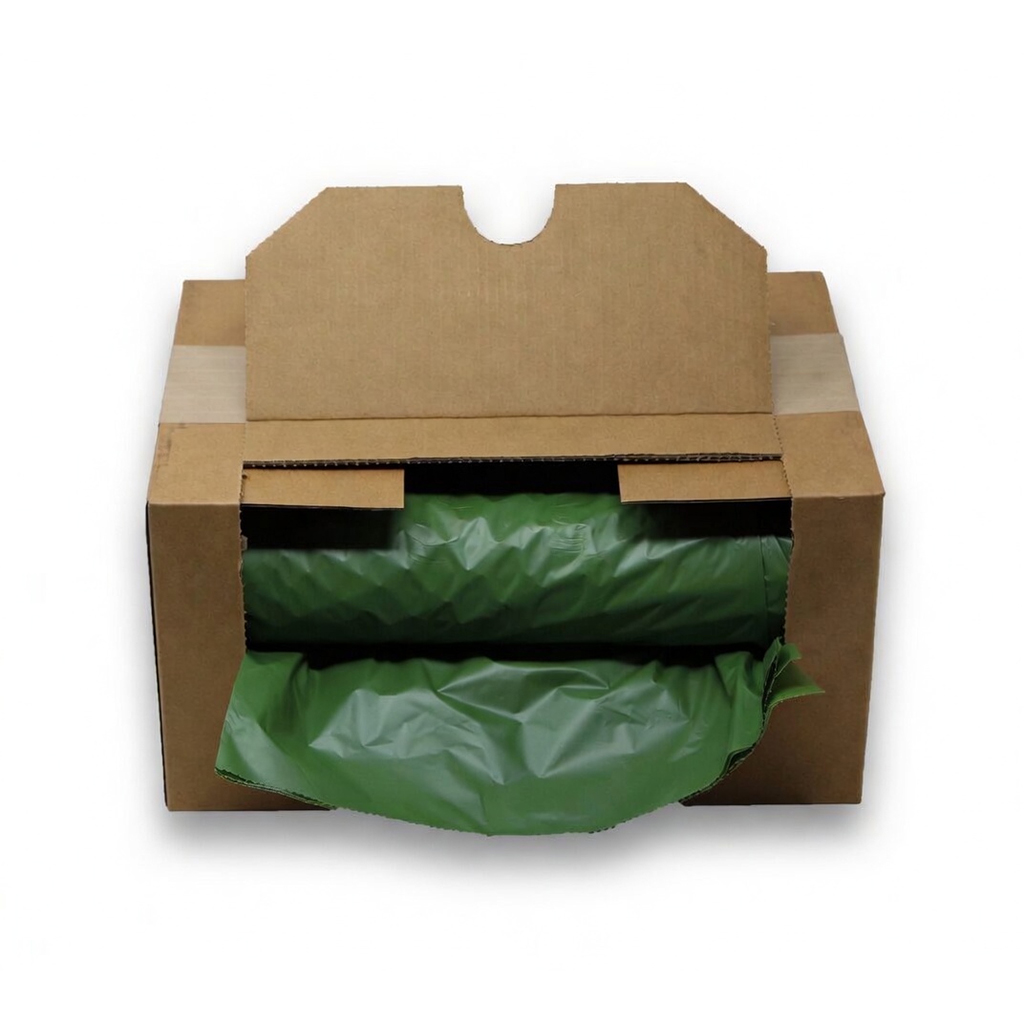
The Largest Certified Compostable Bag — Now in a Commercial Case Built for Municipal and Industrial Procurement
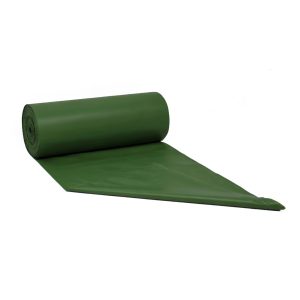
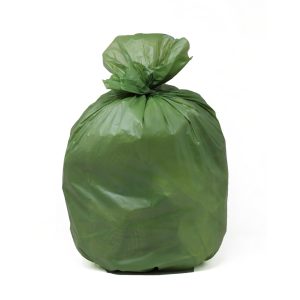
This 60-count commercial case of 64 gallon compostable trash bags delivers the largest certified compostable liner format available at the volume and per-unit economics that municipal programs, waste haulers, venue operators, and institutional buyers require. Every bag in the case measures 43″ × 66″ (109.33 cm × 167.64 cm) with a 242.26-liter capacity and a heavy-duty 0.90 mil (23 micron) wall manufactured from plant-derived PLA (Polylactic Acid) and PBAT (Polybutylene Adipate Terephthalate). Each bag carries dual certification under OK Compost HOME for residential composting and EN 13432 for industrial composting facilities. The 60-count commercial case transforms the highest-capacity composting collection point — the 64 gallon curbside toter — from a contamination liability into a clean organic waste stream.
SAYRU® bulk 64 gallon compostable trash bags in the 60-count commercial case combine 0.90 mil PLA/PBAT construction with dual OK Compost HOME and EN 13432 certification in the industry-standard 43″ × 66″ toter format, providing the procurement-friendly case quantity that enables municipalities, waste management companies, and commercial operations to deploy certified compostable liners across their entire rollcart fleet at commercially viable per-unit pricing. For programs managing thousands of curbside carts, dozens of event waste stations, or multi-site commercial waste consolidation, the 60-count case is the logistics unit that makes the economics work.
Why the 60-Count Case Is the Right Format for Large-Scale Deployment
60-Count Commercial Case — Scaled for Fleet-Level Operations
A residential household using one 64 gallon toter liner per week consumes 52 bags annually. A 10-count retail pack lasts less than 10 weeks and costs retail pricing. The 60-count commercial case provides over a year of supply for a single household — or, more relevantly, one week of supply for a 60-cart municipal route, a single large festival, or a month of service for a 15-cart commercial operation. For municipalities distributing liners to residents, the 60-count case is the right granularity for community distribution events: large enough to serve dozens of households per case, palletizable for warehouse logistics, and accompanied by dual certification documentation that satisfies government procurement requirements. For waste haulers supplying liners to commercial accounts, the case format enables efficient truck delivery and account-level inventory allocation.
Heavy-Duty 0.90 Mil (23 Micron) Wall Construction
A fully loaded 64 gallon rollcart can weigh well over 100 pounds — filled with yard waste, food scraps, mixed organics, or event refuse. That load creates extreme sustained tension on the bag’s bottom seam, sidewall pressure from the mass pressing outward, and sharp impacts from branches, bones, and dense debris mixed throughout. At commercial scale, bag failure is not just inconvenient — it contaminates the cart interior, creates cleanup labor for collection crews, and undermines the credibility of the entire composting program. At 0.90 mils (23 microns), every bag in this 60-count case carries walls engineered for the most extreme loading conditions in the waste management industry. The PLA/PBAT blend sustains heavy loads without bottom failure, absorbs the mechanical shock of automated hydraulic tipping, and resists punctures from mixed debris — performing at the level that municipal collection systems demand.
Plant-Based PLA and PBAT — Industrial-Grade Compostable Performance
The 64 gallon bag is the most mechanically demanding format in the compostable bag category. At 43″ × 66″, the surface area approaches 20 square feet per bag — amplifying every material weakness across a massive film area. These bags must survive being loaded with 80–100+ pounds of waste, rolled across uneven pavement, mechanically lifted by hydraulic arms, tilted to dump their contents, and dropped back to the ground — a cycle that repeats tens of thousands of times per day across a municipal fleet. PLA (Polylactic Acid) from renewable plant feedstock provides the puncture resistance and structural backbone to hold shape under extreme sustained weight. PBAT (Polybutylene Adipate Terephthalate) provides the flexibility and impact resistance to survive automated collection without catastrophic tearing. This dual-polymer system produces a fully compostable bag that performs at the mechanical level of conventional heavy-duty polyethylene can liners.
Dual Certification — The Compliance Foundation for Municipal Programs
The 64 gallon curbside cart is the entry point of the municipal organics collection system — the place where the composting chain of custody begins. Every bag that enters a cart ends up at a composting facility, where non-compostable materials must be screened out at significant labor cost. These bags carry both OK Compost HOME certification (verified by TÜV Austria for biodegradation in home composting) and EN 13432 certification (the European harmonized standard requiring 90%+ biodegradation within 6 months, with strict ecotoxicity and heavy metal limits). For municipal procurement, EN 13432 is typically the mandatory specification in RFPs for toter liner programs. OK Compost HOME adds market flexibility for programs that also serve residents composting at home. One case, 60 bags, both certifications — zero compliance gaps across the entire composting infrastructure.
43″ × 66″ — Universal Toter and Rollcart Compatibility
The 64 gallon rollcart is the most standardized large-format collection vessel in the waste management industry. Municipal waste haulers, curbside organics programs, and commercial waste management companies all operate 64 gallon carts from multiple manufacturers. At 43″ × 66″ (109.33 cm × 167.64 cm) with a 242.26-liter capacity, these bags fit every mainstream 64 gallon rollcart and toter — with sufficient height to fold over the rim and secure under the lid during curbside collection and mechanical tipping. Universal compatibility means zero fit-related complaints from residents, zero returns from distributors, and zero compatibility testing required when a municipality switches cart brands.
Completely Unscented — Clean Feedstock for Composting Operations
Composting facilities market their finished compost based on quality — and chemical contaminants from fragranced bags degrade that quality. These bags are completely unscented: zero fragrances, zero perfumes, zero masking agents. They contribute only compostable plant-based polymers to the organic waste stream. For commercial composting operations that test incoming material for contaminants, and for municipalities that market the quality of their finished compost product, unscented bags protect the value of the end product.
Product Specifications
| Parameter | Detail |
|---|---|
| Pack Count | 60 Bags per Commercial Case |
| Capacity | 64 Gallon (242.26 Liters) |
| Bag Dimensions | 43″ × 66″ (109.33 cm × 167.64 cm) |
| Wall Thickness | 0.90 Mils (23 Microns) |
| Material | PLA (Polylactic Acid) + PBAT (Polybutylene Adipate Terephthalate) |
| Material Source | Plant-derived / renewable resources |
| Scent | Unscented |
| Certifications | OK Compost HOME; EN 13432 (Industrial Composting) |
| Bin Compatibility | Fits standard 64 gallon toters, rollcarts, and extra-large commercial bins |
| Format | Bulk / Commercial Case |
| Recommended Storage | Cool, dry place; use within 12 months of purchase |
Certifications & Compliance: RFP-Ready Documentation
OK Compost HOME — Administered by TÜV Austria, this certification verifies that each bag fully biodegrades under the lower-temperature conditions of residential backyard composting. For municipal programs serving diverse composting pathways — some residents compost at home while others use curbside collection routed to industrial facilities — OK Compost HOME certification ensures the liner is accepted regardless of the resident’s composting method. In a 60-count commercial case, every bag carries this credential uniformly, providing batch-level consistency for large-scale distribution programs.
EN 13432 — The European harmonized standard for packaging recoverable through composting and biodegradation. EN 13432 imposes quantifiable performance thresholds: disintegration within 12 weeks, biodegradation of at least 90% within 6 months, strict limits on heavy metals, and verified absence of negative ecotoxicity effects on the resulting compost. For the 64 gallon toter liner — the bag at the start of the municipal composting chain — EN 13432 certification is the credential that composting facilities require for incoming material acceptance. Government procurement RFPs for curbside organics liner programs universally specify EN 13432 or equivalent. This 60-count case delivers documented, auditable compliance in a single palletizable shipment.
Dual certification positions this product as the procurement-ready choice for every 64 gallon toter application worldwide — from voluntary residential programs to mandatory commercial composting ordinances and EU packaging regulations.
Where 60-Count Cases of 64 Gallon Bags Drive the Most Impact
The 60-count commercial case of certified compostable 64 gallon toter liners is designed for the organizations that operate the largest organic waste collection infrastructure. Below is a comprehensive breakdown by industry and application.
Municipal Curbside Organics Collection Programs
The 64 gallon rollcart is the standard-issue vessel for municipal curbside organics programs. A city serving 50,000 households with weekly collection runs through 50,000 liners per week — 2.6 million per year. At that scale, procurement is measured in pallets and truckloads, not individual packs. The 60-count case is the building block of those pallet quantities — providing the standardized, countable, palletizable unit that municipal purchasing departments need for annual contracts and competitive bidding. Every conventional plastic liner that enters a curbside cart contaminates the composting process: it must be identified, removed, and landfilled at the composting facility. Switching the entire cart fleet to certified compostable liners eliminates that contamination at the source, reducing facility labor, increasing compost yield, and improving finished compost quality. Dual certification satisfies the acceptance standards of every composting facility in the collection network.
Waste Hauling & Collection Companies
Private waste hauling companies that operate curbside organics collection under municipal contracts need certified compostable toter liners at the volumes their route networks demand. A waste hauler servicing 200 commercial accounts with weekly 64 gallon collection consumes 200+ liners per week — over 10,000 per year. The 60-count case provides roughly one week of supply for a 60-account route segment. For haulers supplying liners to their commercial clients as part of a full-service organics diversion contract, the commercial case format enables efficient truck delivery and account-level inventory allocation. EN 13432 certification satisfies the composting facility acceptance standards that haulers must meet under their processing contracts.
Large-Scale Outdoor Events & Multi-Day Festivals
Major music festivals, multi-day sporting events, trade shows, and community celebrations deploy dozens of 64 gallon waste stations across performance areas, vendor courts, beer gardens, camping zones, and backstage areas. A 50,000-attendee festival can consume 100+ toter liners per day across all zones. The 60-count case covers a day-and-a-half of full-site waste station operation — a manageable logistics unit that production teams can pre-stage at zone-level supply depots. Composting mandates in event permits require certified compostable liners. Dual-certified bags allow the entire station contents — food waste, compostable serviceware, napkins, organic refuse — to route directly to the composting stream without bag-removal labor.
Stadium, Arena & Convention Center Operations
Concourse waste consolidation, concession back-of-house, loading dock collection, and exterior waste stations at major venues use 64 gallon carts as the backbone of the event-day waste system. A single NBA or NFL game day can consume 40–60 toter liners across all collection points. The 60-count case covers a full game day — one case per event for mid-size venues, or one case per zone for large stadiums. Venues pursuing LEED certification or Green Sports Alliance membership need certified compostable infrastructure at every tier of the waste hierarchy, from counter bins to consolidation carts.
University & Institutional Campus Waste Systems
Large university campuses operate 64 gallon carts at dining hall loading docks, residence hall courtyards, athletic complex service areas, campus commons, and grounds maintenance staging zones. A major university can deploy 30–50 carts across campus. The 60-count case provides 1–2 weeks of campus-wide supply at weekly changeover rates. University procurement offices need commercial case quantities with dual certification documentation that satisfies institutional sustainability mandates and public procurement compliance standards.
Hotel & Resort Campus Waste Management
Large resort properties, hotel campuses, and hospitality complexes use 64 gallon carts at kitchen loading docks, grounds maintenance staging areas, pool and recreation zones, banquet service docks, and exterior waste collection points. A full-service resort can operate 15–25 carts across the property. The 60-count case provides 2–4 weeks of property-wide supply. For properties pursuing LEED, Green Key, or EarthCheck certification, certified compostable toter liners create documented sustainability improvements at the highest-volume collection points on the property.
Corporate Campus & Business Park Waste Consolidation
Multi-building corporate campuses and commercial business parks use 64 gallon carts at loading dock consolidation areas, cafeteria service docks, and exterior collection points. Facilities managers routing organic waste to composting need certified liners that satisfy both internal ESG reporting requirements and the composting facility’s material acceptance standards. The 60-count case provides multi-month supply for typical corporate campus operations, aligning with quarterly procurement cycles.
Commercial Landscaping Operations
Large-scale landscaping contractors working estate properties, municipal parks, corporate campuses, and highway medians use 64 gallon carts to consolidate yard waste before transport. The extra-large format reduces bag count and changeover time compared to 33 gallon bags. The 60-count case provides weeks of supply for multi-crew operations during peak season. Certified compostable bags ensure landscaping waste enters the composting system without contamination — a requirement for contractors serving clients with documented sustainability standards.
Food Manufacturing & Industrial Composting Collection
Large food manufacturing facilities, distribution centers, and industrial kitchens use 64 gallon carts to collect production waste — processing byproducts, damaged product, trim, and quality-control rejects — for composting diversion. The 0.90 mil wall handles the dense, wet waste loads that food manufacturing generates. EN 13432 certification satisfies the composting facility’s incoming material acceptance standards. The 60-count case provides multi-week supply for production-floor collection programs.
Healthcare System Waste Consolidation
Hospital campuses and healthcare networks use 64 gallon carts at cafeteria loading docks, central kitchen waste consolidation points, and campus-level organics collection stations. The unscented formulation meets healthcare environmental standards. Certified compostable liners divert cafeteria and food-service organics from the general waste stream, supporting the sustainability metrics that healthcare systems increasingly publish in annual impact reports.
Property Management & Multi-Family Organic Waste Collection
Large apartment complexes and managed residential communities that operate shared organics collection using 64 gallon carts at designated collection points need certified compostable liners that residents and maintenance staff can rely on. The 60-count case provides months of supply for a typical multi-family collection program. Dual certification covers the full range of composting endpoints — industrial facilities processing curbside-collected material and community-scale composting programs operating at lower temperatures.
Eliminating Plastic Contamination Where It Matters Most
The 64 gallon curbside rollcart is the single highest-volume entry point in the municipal organic waste management system. Every conventional plastic liner that enters a cart at the curb travels through the entire collection chain — onto the truck, into the facility, through the screening process — before being identified, extracted, and landfilled. At municipal scale, this contamination cycle is staggering: a mid-size city processing 100,000 carts per week may screen out tens of thousands of plastic bags annually, consuming facility labor, reducing composting throughput, and depositing microplastic fragments into the compost that survives screening.
Switching to certified compostable toter liners eliminates this contamination at the origin point. These bags enter the composting process alongside the organic waste and break down completely — into carbon dioxide, water, and organic biomass — under the conditions specified by their OK Compost HOME and EN 13432 certifications. The environmental and operational impact is directly proportional to scale: the more carts switched, the cleaner the incoming material stream, the higher the compost yield, and the better the finished compost quality. The 60-count commercial case is the procurement format that enables this switch at the scale where it matters.
The 0.90 mil wall thickness ensures this transition introduces zero operational compromise. These bags match the performance of conventional polyethylene toter liners through every stage of the collection cycle — loading, transport, mechanical tipping, and compaction.
Storage & Handling for Commercial Inventory
Proper warehouse storage is essential to maintain full performance across the 12-month shelf life. Store cases in a cool, dry environment away from direct sunlight, heating sources, and high humidity. Use pallets or racking — avoid stacking directly on concrete in unclimate-controlled facilities. For seasonal programs (curbside yard waste collection), coordinate purchasing with seasonal demand curves rather than stockpiling through summer. First-in, first-out (FIFO) rotation ensures each bag performs at full specification when deployed. Use within 12 months of purchase.
Frequently Asked Questions
How many bags come in each commercial case?
Each commercial case contains 60 compostable toter liners in the 64 gallon size. This bulk format is designed for municipalities, waste hauling companies, event operators, venue managers, and any organization that deploys 64 gallon rollcarts or toters for organic waste collection at scale.
Are these the same bags as the 10-count retail packs?
Yes. Every bag in the 60-count commercial case is identical in specification to the smaller retail packs: 64 gallon (242.26 liter) capacity, 43″ × 66″ dimensions, 0.90 mil (23 micron) wall thickness, PLA/PBAT plant-based material, unscented, and dual-certified under OK Compost HOME and EN 13432. The only difference is the case quantity and the per-unit economics that bulk purchasing enables.
What certifications do these bags carry?
Each bag holds two independent compostability certifications. OK Compost HOME, administered by TÜV Austria, verifies biodegradation under home composting conditions. EN 13432, the European harmonized standard for industrial composting, requires at least 90% biodegradation within 6 months with strict limits on ecotoxicity and heavy metals. Dual certification qualifies the bags for both residential and industrial composting pathways.
Will these bags fit standard 64 gallon curbside rollcarts?
Yes. At 43″ × 66″ (109.33 cm × 167.64 cm), these bags fit standard 64 gallon rollcarts and toters from all major manufacturers. The height provides sufficient overhang to fold over the cart rim and secure under the lid during curbside collection and mechanical tipping.
Can these bags survive mechanical tipping by collection trucks?
Yes. The 0.90 mil wall thickness and PLA/PBAT dual-polymer system are designed to maintain structural integrity through the hydraulic tipping process used by automated curbside collection vehicles. The PBAT component provides the flexibility and impact resistance to absorb the mechanical forces of automated collection without catastrophic failure.
What are these bags made from?
The bags are manufactured from a blend of PLA (Polylactic Acid), derived from renewable plant sources, and PBAT (Polybutylene Adipate Terephthalate). PLA provides structural rigidity and puncture resistance. PBAT provides flexibility and tear resistance. Both materials are fully compostable under the conditions specified by the product’s certifications.
How long can cases be stored before the bags lose performance?
For optimal tear strength and flexibility, use bags within 12 months of purchase. Store cases in a cool, dry location on pallets or racking, away from direct sunlight, heat, and humidity. First-in, first-out (FIFO) inventory rotation is recommended for standing inventory.
Are these accepted by composting facilities?
These bags meet the EN 13432 standard, which is widely recognized by industrial composting facilities. They also carry OK Compost HOME certification. However, individual composting facilities and municipal programs set their own acceptance policies. Verify with the receiving composting facility that EN 13432-certified liners are accepted in their incoming material stream.
Do these bags help reduce cart cleaning?
Yes. Lining a 64 gallon cart with a compostable bag prevents organic waste from directly contacting the cart interior, significantly reducing residue buildup, odor, and pest attraction between collection days. The liner enters the composting process with the waste, so there is no conventional plastic to remove before collection.
Is the 60-count case format suitable for municipal procurement and distributors?
Yes. The 60-count commercial case is designed for institutional and wholesale procurement. It supports municipal bidding and contract requirements, provides dual certification documentation for government RFPs, ships in a standardized palletizable format, and offers per-unit economics that make large-scale deployment financially viable. Contact SAYRU® for factory-direct pricing, municipal program consultation, private-label options, and custom case configurations.