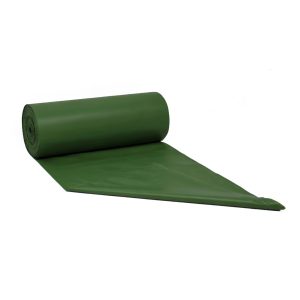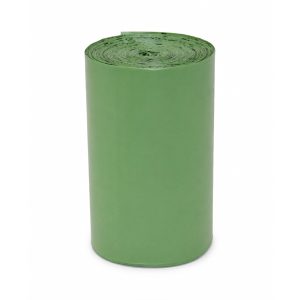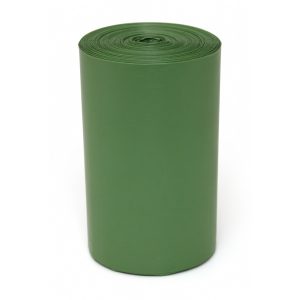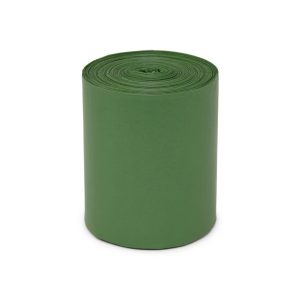
The Extra-Large Compostable Bag Engineered for Curbside Toters, Rollcarts, and High-Volume Waste Stations
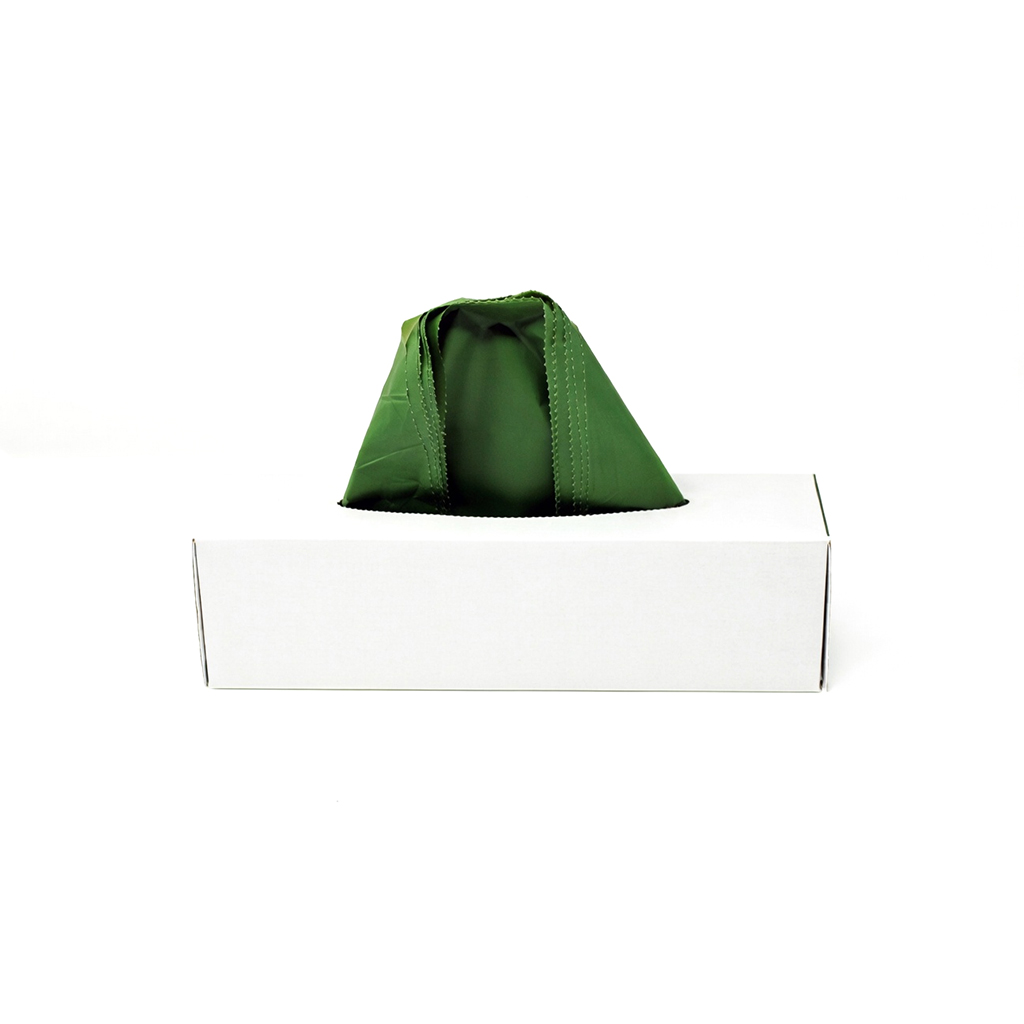
These 64 gallon compostable trash bags are the largest certified compostable liner available — built to fit the full-size curbside rollcarts, toters, and extra-large commercial waste bins that smaller bags cannot cover. Each bag measures 43″ × 66″ (109.33 cm × 167.64 cm) with a 242.26-liter capacity and a heavy-duty 0.90 mil (23 micron) wall manufactured from plant-derived PLA (Polylactic Acid) and PBAT (Polybutylene Adipate Terephthalate). Dual-certified under OK Compost HOME for backyard composting and EN 13432 for industrial composting facilities, these bags turn the highest-volume waste receptacles in residential and commercial settings into certified composting collection points.
SAYRU® 64 gallon compostable trash bags combine 0.90 mil PLA/PBAT construction with dual OK Compost HOME and EN 13432 certification in a full-size 43″ × 66″ toter-compatible format, making them one of the few extra-large compostable bags on the market that deliver both the structural capacity for the heaviest curbside loads and the certification credentials that municipal composting programs demand. Whether you are lining residential curbside organics carts, equipping commercial waste stations at outdoor venues, or supplying municipal collection programs with certified toter liners, this is the bag that bridges the gap between maximum capacity and full compostability.
Built for the Biggest Loads: Features That Handle Toter-Scale Demands
Heavy-Duty 0.90 Mil (23 Micron) Wall Thickness
A fully loaded 64 gallon rollcart can weigh 60, 80, or 100+ pounds — filled with yard waste, food scraps, mixed organics, or event refuse. That load concentrates extreme forces on the bag: sustained gravitational pull on the bottom seam, sidewall tension from the weight pressing outward, and sharp impacts from branches, bones, and dense debris. Thin bags in this size class fail in the worst possible way — splitting inside a toter that must then be cleaned, or bursting when lifted for emptying. At 0.90 mils (23 microns), these bags carry walls engineered for the extreme weight and sustained load that 64 gallon applications demand. The PLA/PBAT material blend resists bottom blowouts under sustained weight, absorbs sharp impacts from mixed debris, and maintains structural integrity through the mechanical tipping process that curbside collection vehicles use to empty rollcarts.
43″ × 66″ — The Standard Toter and Rollcart Format
The 64 gallon capacity is the standard specification for residential curbside rollcarts and commercial toters across North America. Municipal waste haulers, residential composting programs, and commercial waste management companies all use 64 gallon containers as their primary large-format collection vessel. At 43″ × 66″ (109.33 cm × 167.64 cm) with a 242.26-liter capacity, these bags are dimensioned to fit standard 64 gallon rollcarts and toters from all major manufacturers — with sufficient height to fold over the cart rim and secure under the lid. That universal fit eliminates the compatibility guesswork that wastes bags and frustrates end users trying to match liners to their municipality’s issued carts.
Plant-Based PLA and PBAT Dual-Polymer System
The engineering requirements of a 64 gallon compostable bag are the most demanding in the entire product category. The surface area is massive — nearly 20 square feet of material per bag — which means every structural weakness in the polymer is amplified. The loads are the heaviest of any bag format. And the handling is the roughest: these bags are loaded into wheeled carts, rolled to curbside over uneven pavement, mechanically tipped by hydraulic arms on collection trucks, and dropped into compaction chambers. PLA (Polylactic Acid) from renewable plant feedstock provides the puncture resistance and structural stiffness to hold shape under enormous sustained weight. PBAT (Polybutylene Adipate Terephthalate) delivers the flexibility and elongation to absorb the mechanical shocks of automated collection without catastrophic failure. This two-component system replicates the performance of conventional heavy-duty polyethylene can liners — using fully compostable polymers.
Dual Compostability Certification — Home and Industrial
The 64 gallon rollcart is the primary collection vessel for municipal organics programs that handle the largest volumes of compostable material — yard waste, food scraps, and mixed organics. These bags carry both OK Compost HOME certification (verified by TÜV Austria for biodegradation in backyard composting systems) and EN 13432 certification (the European harmonized standard for industrial composting, requiring 90%+ biodegradation within 6 months with strict ecotoxicity and heavy metal limits). For municipalities that require certified compostable liners in curbside organics carts, dual certification ensures the bags meet every program specification — whether the collected material goes to an industrial composting facility or is diverted through residential composting initiatives.
Completely Unscented — Zero Chemical Additives
Curbside organics carts sit in garages, side yards, and outdoor storage areas for days between collections — conditions where trapped heat and moisture accelerate odor development. Fragranced bags mask odor temporarily but deposit synthetic chemical residue in the organic waste stream, potentially compromising compost quality. These bags are completely unscented, contributing only clean, compostable plant-based polymers to the waste stream. For commercial composting facilities that monitor incoming contaminant levels, and for municipalities marketing the quality of their finished compost product, unscented bags reduce the chemical contamination risk.
Product Specifications
| Parameter | Detail |
|---|---|
| Pack Count | 10 Bags |
| Capacity | 64 Gallon (242.26 Liters) |
| Bag Dimensions | 43″ × 66″ (109.33 cm × 167.64 cm) |
| Wall Thickness | 0.90 Mils (23 Microns) |
| Material | PLA (Polylactic Acid) + PBAT (Polybutylene Adipate Terephthalate) |
| Material Source | Plant-derived / renewable resources |
| Scent | Unscented |
| Certifications | OK Compost HOME; EN 13432 (Industrial Composting) |
| Bin Compatibility | Fits standard 64 gallon toters, rollcarts, and extra-large commercial bins |
| Recommended Storage | Cool, dry place; use within 12 months of purchase |
Certifications & Compliance: Credentials for the Largest Collection Format
OK Compost HOME — Issued by TÜV Austria, this certification verifies that each bag fully biodegrades under the lower-temperature conditions of residential backyard composting. While most homeowners won’t place a 64 gallon bag into a backyard pile, this certification is significant for municipal programs that accept compostable liners in curbside carts and route some collected material through community-scale composting initiatives that operate under home composting parameters. It also provides distributors maximum market flexibility — one product that is certified for every composting environment.
EN 13432 — The European harmonized standard for packaging recoverable through composting and biodegradation. EN 13432 mandates disintegration within 12 weeks, biodegradation of at least 90% within 6 months, strict limits on heavy metals, and verified absence of negative ecotoxicity effects on finished compost. For the 64 gallon format — the bag that goes into the curbside cart that gets emptied into the collection truck that delivers material to the industrial composting facility — EN 13432 is the certification that keeps the bag in the composting process instead of being screened out as a contaminant. Municipal procurement RFPs for toter liner programs universally specify EN 13432 or equivalent certification.
Dual certification makes this product the defensible choice for every 64 gallon application — from municipal organics collection to commercial event waste to large-scale yard waste programs.
Where 64 Gallon Compostable Bags Work: The Biggest Applications for the Biggest Bag
The 64 gallon format serves the highest-volume, highest-capacity waste collection applications in both municipal and commercial settings. Below are the specific environments where this certified compostable toter liner solves documented operational challenges.
Municipal Curbside Organics Collection
The 64 gallon rollcart is the standard-issue collection vessel for municipal curbside organics programs across North America. Residents load yard waste, food scraps, and compostable materials into the cart, which is mechanically emptied by collection vehicles. Conventional plastic liners contaminate the entire load, forcing composting facilities to screen, remove, and landfill them. These certified compostable liners eliminate that contamination pathway: the bag enters the composting process with its contents and breaks down alongside the organic material. For municipalities distributing or recommending liners to residents, dual certification satisfies every composting facility’s acceptance requirements.
Residential Curbside Yard Waste & Organics
Homeowners with municipality-issued 64 gallon carts use toter liners for yard waste (leaves, grass, clippings, garden debris) and mixed organics (food scraps, compostable serviceware, soiled paper). The 0.90 mil wall handles the extreme weight of wet yard waste — saturated leaves, dense grass clippings, and heavy garden debris — without tearing when the cart is rolled to the curb or mechanically tipped. The bag keeps the cart interior cleaner, reducing the odor, pest attraction, and residue buildup that make unlined carts unpleasant to use and maintain.
Large-Scale Outdoor Events & Festivals
Major events deploy extra-large bins and rollcarts at high-traffic waste stations — main stage areas, vendor food courts, beer gardens, and entrance/exit zones where foot traffic produces the highest waste volumes. A single 64 gallon station can collect waste from hundreds of attendees per hour. The 0.90 mil construction handles the extreme weight and moisture of event waste: half-consumed drinks, food scraps, compostable plates and cups, napkins, and mixed organic refuse piled to capacity. For events operating under zero-waste or composting mandates, certified compostable toter liners allow the entire bin contents to be routed directly into the composting stream.
Commercial Landscaping & Large-Scale Yard Waste
Professional landscaping operations working large properties — corporate campuses, public parks, university grounds, residential estate maintenance — generate volumes of yard waste that exceed what 33 gallon bags can practically handle. Loading material into 64 gallon cart liners reduces the total number of bags required per job site, speeds cleanup, and reduces the trips between work area and truck. The 43″ × 66″ dimensions accommodate bulky material — long branch trimmings, large leaf piles, and voluminous grass clippings — that cannot be compacted into smaller bags without excessive effort.
Hotel & Resort Grounds Operations
Resort properties, hotel campuses, and hospitality complexes with extensive landscaped grounds generate large volumes of yard waste from lawn maintenance, seasonal plantings, palm frond and tropical debris cleanup, and storm damage clearing. Grounds crews use 64 gallon carts to consolidate yard waste before transport to composting areas or curbside collection. For properties pursuing green hospitality certifications, switching to certified compostable cart liners creates documented sustainability improvements in an operational area — grounds maintenance — that auditors specifically evaluate.
Stadiums, Arenas & Convention Centers
Back-of-house waste consolidation areas at venues use 64 gallon carts to aggregate waste from smaller bins across concession areas, concourses, and hospitality suites. During a major event, dozens of 64 gallon carts rotate through the collection cycle. Venues pursuing LEED certification or Green Sports Alliance membership need compostable infrastructure at every level of the waste hierarchy — from the 8 gallon counter bin to the 64 gallon consolidation cart. These certified liners ensure the organic waste stream stays clean from point of collection through final composting.
Farmers’ Markets & Outdoor Retail Operations
Market-wide waste stations at large farmers’ markets, outdoor retail events, and flea markets use 64 gallon carts as the central collection point for vendor and customer waste. Market organizers mandating zero-waste or composting compliance need compostable liners in every cart. The 64 gallon format minimizes changeover frequency during peak market hours — one bag serves for extended periods before needing replacement. The 0.90 mil wall handles the heavy produce waste, spoiled goods, and wet organic material that farmers’ market operations generate.
University & School Campus Waste Management
Campus recycling and composting programs use 64 gallon carts at residence hall courtyards, dining hall loading docks, athletic facility service areas, and campus commons where organic waste volumes are highest. The dual certification satisfies the sustainability documentation requirements of university procurement offices and aligns with institutional mandates for bio-based products. For campuses operating their own composting programs, certified compostable cart liners ensure the collection vessel itself does not contaminate the process.
Corporate Campus & Business Park Waste Consolidation
Large corporate campuses and multi-tenant business parks use 64 gallon carts at loading dock waste consolidation areas, cafeteria service docks, and exterior waste collection points. Facilities managers routing organic waste to composting need certified liners that satisfy both their internal sustainability reporting and the composting facility’s material acceptance standards. The 64 gallon format reduces the number of individual bag changes required per shift, improving labor efficiency at high-volume collection points.
Food Manufacturing & Industrial Kitchen Waste
Large food manufacturing facilities, commissary kitchens, and industrial-scale food-prep operations generate enormous volumes of organic production waste — crop trim, processing byproducts, damaged product, and quality-control rejects. Extra-large carts with compostable liners allow production floors to collect and divert organic waste without contaminating it with conventional plastic. The 0.90 mil wall handles the dense, wet waste loads that food manufacturing produces, and the EN 13432 certification satisfies the composting facility’s incoming material standards.
Healthcare Campus Waste Consolidation
Hospital campuses and healthcare systems use 64 gallon carts at cafeteria service docks, loading areas, and exterior waste collection zones to consolidate non-medical organic waste from across the facility. The unscented formulation meets healthcare environmental standards, and the certified compostable material diverts organics from the general waste stream — supporting the sustainability targets that healthcare systems increasingly publish.
Construction Sites & Job Site Organic Waste
Large construction projects with extensive site clearing, grading, and landscaping phases generate organic debris that can be diverted from the general construction waste stream using compostable liners in 64 gallon carts. For projects pursuing LEED certification, documented composting of organic site waste contributes to waste diversion credits. The 64 gallon format accommodates the bulky vegetation, root material, and landscape debris that construction sites produce.
Eliminating Plastic Contamination at the Highest-Volume Collection Point
The 64 gallon curbside cart is the single highest-volume collection point in the organic waste management chain. Every conventional plastic liner placed in a curbside organics cart ends up at a composting facility where it must be identified, extracted, and landfilled — adding significant labor cost, reducing composting throughput, and leaving behind microplastic fragments that compromise finished compost quality. At municipal scale, the contamination problem is enormous: a city serving 100,000 households may process hundreds of thousands of plastic-contaminated bags annually.
These certified compostable bags eliminate that contamination loop at the source. Manufactured from plant-derived PLA and PBAT, they break down completely into carbon dioxide, water, and organic biomass when composted under the conditions specified by their OK Compost HOME and EN 13432 certifications. The environmental impact is proportional to the volume: because the 64 gallon format handles the largest loads at the highest collection frequency, switching this one bag to compostable removes the most plastic from the composting stream per unit switched.
The 0.90 mil wall thickness ensures this environmental benefit introduces zero operational compromise. These bags match the tensile strength, puncture resistance, and load capacity of conventional polyethylene toter liners — the only difference is what happens at the composting facility.
Storage & Handling Recommendations
These bags are manufactured from plant-based polymers designed to biodegrade, making proper storage critical for maintaining performance. Store in a cool, dry location away from direct sunlight, heating sources, and humidity. Avoid storing in unventilated outdoor sheds or garages where summer heat can accelerate premature decomposition. Use within 12 months of purchase for optimal tear strength and flexibility. For operations maintaining inventory, first-in, first-out (FIFO) rotation is recommended.
Frequently Asked Questions
Will these bags fit my 64 gallon curbside rollcart?
Yes. At 43″ × 66″ (109.33 cm × 167.64 cm) with a 242.26-liter capacity, these bags are designed to fit standard 64 gallon rollcarts and toters from all major manufacturers. The dimensions provide sufficient height to fold over the cart rim and secure under the lid during curbside collection.
How thick are these bags?
Each bag features 0.90 mil (23 micron) wall thickness — engineered for the extreme weight loads that 64 gallon applications produce. The PLA/PBAT dual-polymer blend provides the puncture resistance and sustained-load capacity needed for wet yard waste, heavy food scraps, and mixed organic refuse at toter-scale volumes.
What certifications do these 64 gallon bags carry?
Each bag carries two independent certifications. OK Compost HOME, administered by TÜV Austria, verifies biodegradation under home composting conditions. EN 13432, the European harmonized standard for industrial composting, requires at least 90% biodegradation within 6 months with strict limits on ecotoxicity and heavy metals. Dual certification qualifies the bags for both residential and industrial composting pathways.
What are these bags made from?
The bags are manufactured from a blend of PLA (Polylactic Acid), derived from renewable plant sources, and PBAT (Polybutylene Adipate Terephthalate). PLA provides structural rigidity and puncture resistance. PBAT provides flexibility and tear resistance. Both materials are fully compostable under the conditions specified by the product’s certifications.
Can my municipal composting program accept these bags?
These bags meet the EN 13432 standard, which is widely recognized by industrial composting facilities. They also carry OK Compost HOME certification. However, individual municipal programs and composting operators set their own acceptance policies. Check with your local curbside organics program to confirm that certified compostable liners are accepted in your 64 gallon cart.
Will these bags survive mechanical tipping by collection trucks?
The 0.90 mil wall thickness and PLA/PBAT material blend are designed to maintain structural integrity through the mechanical tipping process used by curbside collection vehicles to empty rollcarts. The PBAT component provides the flexibility and impact resistance needed to absorb the forces of automated collection without catastrophic tearing.
Do these bags help keep my rollcart clean?
Yes. Lining your 64 gallon cart with a compostable bag prevents organic waste from contacting the cart interior directly, significantly reducing residue buildup, odor development, and pest attraction between collection days. Because the liner is compostable, it enters the composting process with the waste — no need to remove a conventional plastic liner before collection.
Do these bags have any scent?
No. These bags are completely unscented — no added fragrances or chemical masking agents. This ensures the bags contribute only clean, compostable plant-based material to the organic waste stream, with no synthetic residue that could compromise compost quality.
How should I store these bags?
Store in a cool, dry place away from direct sunlight, heat, and humidity. Avoid unventilated garages or sheds where summer heat can accelerate premature decomposition. Use within 12 months of purchase for best performance.
Is this product available in larger bulk quantities?
Yes. In addition to the standard 10-count pack, the 64 gallon format is available in a 60-count commercial case for municipalities, waste haulers, event operators, and institutional buyers. Contact SAYRU® for factory-direct bulk pricing, custom case quantities, and private-label packaging options.